
Indian benchmark stock indices Sensex and Nifty rebounded nearly 1 per cent, snapping a three-day decline, driven by rallies in Reliance Industries and Sun Pharma, alongside positive global market trends and easing geopolitical tensions.

Indian equity benchmark indices Sensex and Nifty surged significantly in early trade, mirroring a global market rally and a drop in crude oil prices below USD 100 per barrel, driven by renewed hopes of diplomatic engagement between the US and Iran.

Indian benchmark equity indices, Sensex and Nifty, experienced a decline in early trade, ending a three-day rally, primarily due to heavy selling in IT stocks and concerns over prolonged instability in West Asia.
The demerger of Vedanta's four new entities - Vedanta Aluminium Metal, Vedanta Oil & Gas, Vedanta Power, and Vedanta Iron & Steel - has led to a 16% appreciation in aggregated market capitalisation, with Vedanta Aluminium Metal identified as a likely near-term top performer due to its scale, low production costs, and favourable commodities cycle.

Public sector banks in India are increasing their IT spending to bolster cybersecurity measures in response to concerns about Anthropic's Claude Mythos AI tool and its potential to exploit vulnerabilities in financial systems.

As the rupee weakens, wealthy families are accelerating investments in global assets.

Indian benchmark indices, Sensex and Nifty, closed lower, primarily due to a sharp sell-off in IT stocks, a fresh surge in crude oil prices, and sustained outflows from foreign institutional investors. The Sensex dropped over 300 points, while the Nifty declined by 77.95 points.

Indian benchmark indices Sensex and Nifty experienced a significant tumble in early trade, driven by surging global oil prices, continuous outflows by Foreign Institutional Investors (FIIs), and persistent geopolitical uncertainties, particularly in West Asia.
Meta has partnered with Reliance Industries Ltd (RIL) to construct its first AI-powered data centre in India, a 168-megawatt facility located in Jamnagar, marking a significant milestone in Meta's global infrastructure expansion and deepening its strategic partnership with Reliance.
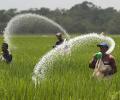
India's Central government is likely to see its fertiliser subsidy bill double to a record 3.4 trillion in FY27, up from the Budget estimate of 1.7 trillion, due to surging global fertiliser prices exacerbated by the West Asia war. This significant increase, coupled with revenue losses from excise duty cuts for oil-marketing companies, is straining the government's fiscal space, though capital expenditure plans remain unchanged.

Indian benchmark indices Sensex and Nifty closed marginally lower due to profit-taking, following the Reserve Bank of India's decision to keep the repo rate unchanged while lowering its growth expectations for the current fiscal year and forecasting higher inflation.
Indian equities on Dalal Street declined in early trade on Monday as crude oil prices climbed amid fears of further escalation in the West Asia the war. Track Sensex, Nifty50 movement and key market drivers for Apr 6, 2026.

'Why not aspire for 8 or 9 or even 10 per cent?'

Indian equity benchmarks Sensex and Nifty surged nearly 1 per cent, driven by strong earnings reports from FMCG and auto sectors, alongside a rally in Asian markets and signs of de-escalation in geopolitical tensions.

Apple CEO Tim Cook expresses strong optimism about the Indian market, citing its potential for growth and the company's recent successes in the region.

India's crude oil imports from Russia reached a record high of approximately 2.73 million barrels per day (mbpd) in June, driven by discounts of $2-5 a barrel. This surge comes as the West Asia crisis disrupted supplies from traditional sources and China reduced its own purchases, leading Russia to offer more favourable terms to India.
Indian markets on Dalal Street rallied sharply as easing tensions in the US-Iran conflict and stable oil prices boosted sentiment. Track Nifty 50 and BSE Sensex performance and key global triggers.

'Dark patterns exploit human psychology, cognitive biases, urgency, confusion, or lack of attention to increase revenue for digital platforms at the expense of consumer choice and transparency.'

Customs officials at Delhi's IGI Airport seized over 6 kg of hydroponic weed, valued at Rs 2.1 crore, from an Indian passenger arriving from Bangkok. The high-potency cannabis was found during baggage screening, leading to a case under the NDPS Act.

Formerly Iran's second-largest oil customer, Indian financial institutions were forced to withhold crude oil payments following the 2018 US sanctions.

Mahindra & Mahindra (M&M) is expanding its farm equipment strategy beyond tractors to include a wider range of mechanisation solutions like harvesters, balers, seed drills, and telematics-enabled services, aiming to capitalise on the growing demand for rental services by rural entrepreneurs and address low mechanisation levels in Indian agriculture.
The India-Oman free trade agreement, operationalised on June 1, is set to create significant export opportunities for India's labour-intensive and value-added sectors, including textiles, gems and jewellery, and marine products, while also strengthening energy security.

Amazon plans to significantly expand its use of automation and advanced robotics, including systems like the SLAM labeler, across its Indian fulfilment centres. The company, which has committed substantial investments in India, also highlighted its global rollout of autonomous robots like Proteus and cautioned against premature AI regulation that could stifle innovation.

'Tightening of visa norms for international students around the world are a concern for the university and the education sector, even as the UK continues to offer relatively attractive post-study work opportunities compared to several competing markets.'

The reopening of the Strait of Hormuz, following a ceasefire agreement between the US and Iran, is expected to significantly ease India's crude oil supply risks, lower freight costs, and reduce inflationary pressures, as global oil prices have already dropped.

Rising study-abroad costs are prompting families to use education loans strategically while preserving savings, liquidity and long-term financial stability, says Yogesh Rawat

Indian benchmark stock indices, Sensex and Nifty, closed nearly 1 per cent lower following the collapse of US-Iran negotiations, which heightened concerns of a prolonged conflict in West Asia and drove crude oil prices sharply higher.
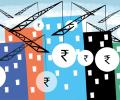
India's five publicly listed Real Estate Investment Trusts (REITs) collectively distributed more than Rs 2,566 crore to over 425,000 unitholders in Q4FY26, with a cumulative distribution exceeding Rs 8,900 crore for the full fiscal year.
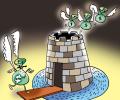
Foreign Portfolio Investors (FPIs) withdrew nearly Rs 33,000 crore from Indian equities in May, bringing the total outflow for 2026 to Rs 2.25 lakh crore, driven by weak earnings growth, rupee depreciation, and more attractive opportunities in other global markets.

Omar Abdullah has so far laboured hard to make best of a bad bargain. Even so, the ground reality is anything but reassuring. The Opposition parties, including notably the PDP, appear to be gaining ground, though more by default. Public patience with Omar's government has nearly run out, notes Mohammad Sayeed Malik, the distinguished commentator on Kashmir affairs.

Fintech platform CRED announced a significant funding round of Rs 8,550 crore led by Meta, coinciding with founder Kunal Shah's departure as CEO to take on the global leadership role for WhatsApp.

Indian equities are experiencing their sharpest rebound in years, with the BSE 500 index rallying 12.1 per cent so far this month, echoing Covid-era recoveries despite ongoing geopolitical uncertainty and earnings risks.

The Indian government has restricted industrial, commercial, and institutional users from purchasing petrol and diesel from retail petrol pumps, directing them to bulk sale points instead. This move, which can last up to 90 days, aims to address abnormal demand growth and prevent localised shortages caused by a significant price difference between retail and bulk fuel prices.
Indian stock markets experienced a significant rally following the announcement of a US-Iran ceasefire, coupled with a drop in crude oil prices. The Sensex and Nifty both closed nearly 4 per cent higher, mirroring gains in global markets.

The start of the West Asia conflict has led to a sharp increase in crude-linked raw material prices, pushing up the price of helmets across the country.

Beauty and lifestyle retailer Nykaa has announced a multi-year collaboration with OpenAI to integrate AI-driven shopping experiences through ChatGPT. This partnership will allow users to receive conversational recommendations for beauty and fashion products, with Nykaa fulfilling these queries. Additionally, OpenAI's technologies will be deployed across Nykaa's internal operations to boost productivity.

Benchmark Sensex tumbled 1,236 points or 1.5 per cent while Nifty closed near 25,450 on Thursday following an across-the-board sell-off amid escalating geopolitical tensions between the US and Iran.

India has strongly condemned Pakistan's military airstrikes against Afghanistan, citing significant civilian casualties, and criticised its 'trade and transit terrorism' against Afghan traders, calling these actions blatant violations of international law and UN norms.

Holoflex Ltd, a leading anti-counterfeiting and security solutions provider, plans to invest Rs 30 crore over the next two years to establish a second manufacturing facility. This expansion is driven by increasing demand for integrated brand protection solutions and growing concerns over counterfeit products across various sectors, including essential goods. The company aims to significantly boost its revenue and strengthen its position in the rapidly growing anti-counterfeiting market.

India now ranks among the world's top three destinations for both AI and STEM talent, holding roughly a 6 per cent share of globally mobile AI talent and a 7 per cent share of STEM talent.
